
Cladding Cleaning
Specialist softwash cladding cleaning across Staffordshire, the West Midlands and the wider Midlands. Safe on every panel type – metal composite, powder-coated aluminium, uPVC, timber, fibre-cement and more. Warranty-conscious, insured, delivered without the risks that come with high-pressure washing.
Modus Softwashing is a specialist Cladding Cleaning contractor working exclusively across the Midlands.
Modern cladding transforms how a building looks but it’s remarkably vulnerable to being cleaned the wrong way. High-pressure water can void manufacturer warranties, drive water behind insulated panels, damage joint seals and cause discolouration that’s often permanent. At Modus Softwashing, we clean cladding the safe way: a specialist softwash system delivered at low pressure, with chemistry matched to the panel type. Manufacturer-friendly, warranty-conscious, and just as effective on 20 years of atmospheric grime as on early-stage algae growth
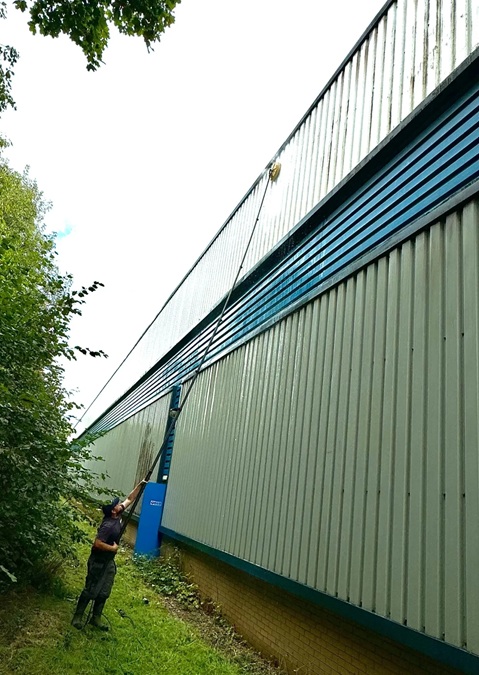
13 Years Of Cleaning Success!
- Over 13 years of expertise
- Fully Insured
- Safe on K-rend and Monocouche
- Free no-obligation quotes
- Residential and Commercial Premises
2000+
Successfully Projects Cleaned.
13+
Years of experience with pride.
11200+
Sq Metres of Driveways Cleaned.
8000+
Sq Metres of Render Cleaned.

Why Cladding Needs a Specialist Method
Why Cladding Cleaning Isn’t a Job for a Pressure Washer
Most cladding installers, and most cladding manufacturers, will tell you the same thing: high-pressure washing is the single biggest cause of avoidable cladding damage.
Four specific risks apply to virtually every cladding system on the market:
1. Water ingress behind panels. Cladding systems, particularly insulated composite panels (Kingspan, Trimo, Isopanel) and rainscreen cladding rely on carefully engineered joints and drainage paths to shed water safely. High-pressure water forces its way past those joints and gets behind the panels. Once water is behind the panel, it can affect insulation performance, cause internal condensation, and in worst cases damage the structural substrate.
2. Sealant and joint damage. Cladding joints are sealed with silicone, EPDM or similar materials. High-pressure water erodes these seals over time. Once compromised, joint sealants let more water in – which then needs specialist remediation to put right.
3. Surface damage and discolouration. Powder-coated aluminium, painted metal and uPVC cladding all rely on a thin surface coating for their appearance and weather protection. High-pressure water can strip that coating, particularly at joints, edges and corners where the pressure concentrates. The result: patchy fading, visible wash marks, and often the need for expensive recoating.
4. Warranty voidance. Almost every major cladding manufacturer specifies acceptable cleaning methods in their warranty documentation. High-pressure washing is either explicitly prohibited or restricted to specific low-pressure fan settings that most commercial pressure-washing operators don’t respect. Using an inappropriate cleaning method can void an otherwise-valid warranty.
Softwashing avoids every one of these risks. Low-pressure application, biocide chemistry that kills algae and staining at the root, no mechanical force on joints, seals or coatings. It’s what cladding manufacturers themselves generally recommend.
Cladding Systems We Clean
Cladding Types We Clean.
The word “cladding” covers a family of very different materials, each with its own considerations. We’re set up to clean all the common systems:
Insulated composite / metal cladding Kingspan (KS1000, QuadCore and similar), Trimo, Isopanel, ArcelorMittal, Tata Colorcoat; the systems that dominate industrial units, distribution centres, warehouses, retail sheds and modern commercial buildings. Softwashing is the appropriate method: no water ingress risk, no coating damage, warranty-safe.
Powder-coated aluminium and steel cladding Common on modern office facades, curtain-wall systems, retail units and higher-spec commercial buildings. The powder-coated surface is what gives these panels their appearance and weather protection. It must not be stripped by aggressive pressure washing. Softwash chemistry is matched to the coating type.
uPVC cladding Widely used on residential extensions, garden rooms, contemporary properties, and lower-cost commercial installations. Prone to algae and biological staining, particularly on north-facing elevations. Softwashing lifts the staining without discolouring the substrate.
Timber cladding Cedar, larch, Siberian larch, thermally-modified timber, and painted timber cladding. Common on contemporary new-builds, extensions, and eco-conscious commercial and residential projects. Timber needs particular care, the cleaning method has to respect the natural surface without stripping oils, opening the grain or damaging any factory finish. Softwash chemistry adjusts accordingly.
Fibre-cement cladding HardiePanel, Cembrit, Equitone and similar fibre-cement systems. Extremely durable, but the surface finish still needs sympathetic cleaning. Softwashing removes atmospheric grime and biological staining without affecting the manufacturer’s applied coating.
Composite and WPC cladding Wood-plastic composite systems used on modern residential and commercial projects. Softwashing is straightforward.
ACM (Aluminium Composite Material) cladding Now used to a much more limited extent following building regulation changes. Where present, we clean it using the same softwash method, with particular attention to joint detailing.
Traditional and heritage cladding Slate hanging, tile hanging, weatherboarding on historic buildings. These need particularly careful treatment and Steven’s MA in Architectural Conservation is relevant to work on any historic or listed building where the cladding forms part of the heritage fabric.
If you’re not sure what your cladding is, that’s not a problem as we’ll identify it at the free site survey

Where Cladding Cleaning Fits
Cladding cleaning is a service we deliver across a genuinely wide range of buildings:
Commercial premises Industrial units, distribution centres, warehouses, retail sheds, modern office buildings, business parks, retail parks. Cladding is the dominant facade material on most of these building types, and periodic cleaning is essential to maintain appearance and, in some cases, warranty compliance. See our Commercial Building Cleaning page for more on our commercial service model.
Care homes and healthcare premises Most modern care home buildings use significant cladding – often uPVC, Hardie Panel or metal composite. Presentation directly affects family visits, CQC impressions and prospective-resident tours. Softwashing is quieter and safer than pressure-washing for occupied premises.
Schools and educational buildings Modern school buildings, particularly the wave built in the 2000s and 2010s use extensive cladding systems. Holiday-window cleaning cycles preferred, working around term dates and safeguarding requirements.
Retail and hospitality Shop fronts, retail-park units, restaurant facades, boutique hotels. Kerb appeal drives footfall; cladding that’s gone dark or streaky drives customers away.
High-end residential Contemporary detached properties, executive homes with cladding-clad extensions, coastal properties, cedar and larch clad new-builds, garden rooms and modern outbuildings. Residential cladding cleaning is a real and growing part of our work, particularly on newer builds across executive estates where the original cladding installation is now 5–10 years old and starting to show its age.
Public buildings Civic buildings, community centres, sports facilities and other public estate. Softwashing works well on the mix of cladding types you find on these buildings.
How We Clean Cladding
Our Cladding Cleaning Process
Every job follows the same structured process:
1. Free site survey. We visit the property, identify the cladding system and any complicating factors (adjacent glazing, landscaping, occupied premises, access constraints), and confirm what’s realistic given our ground-level working range. You get a written, no-obligation quote.
2. Tailored softwash mix. Different cladding systems need different chemistry. Painted powder-coated aluminium needs a different mix than fibre-cement or timber. We adjust the biocide concentration and any additional detergent or surfactant stages accordingly.
3. Low-pressure application. Professional softwash equipment, applied at pressures barely above a garden hose. No mechanical force on the cladding surface, joints or seals.
4. Dwell time. The biocide is left to work; typically 30–60 minutes. This kills algae, moss, lichen and black mould at the spore level.
5. Rinse and finish. Where appropriate, we rinse with clean water. On some cladding surfaces the treatment continues working over the following days and weeks as the biocide finishes its job.
6. Aftercare advice. Honest guidance on when the cladding is likely to need attention again, typically every 2–4 years, sooner for coastal exposure, industrial pollution corridors or heavily-shaded elevations.
Working from Ground Level
How We Access Cladding
We’re upfront about this because it matters for scoping: Modus works from ground level using professional softwash equipment.
Our extending softwash lances give us safe, clean reach on:
- Single-storey commercial premises and residential properties
- Two-storey buildings (typical care homes, retail units, smaller offices, most schools, residential properties)
- Three-storey buildings where elevations aren’t obstructed
- Industrial and warehouse elevations up to the reachable ground-level range
Where cladding sits beyond safe ground-level reach such as tall industrial elevations, multi-storey office facades, high-level cladding on modern developments you have two options:
- We integrate with your existing or contracted access arrangements. If you have scaffolding, an access platform contractor or an in-house solution in place, we can work alongside it. Softwashing from an existing platform is straightforward.
- We scope out the higher elevations from the job. For many cladding-cleaning projects, the lower elevations are what visitors and passers-by actually see. Cleaning those alone delivers most of the visible benefit at a fraction of the cost.
We’ll discuss what’s realistic at survey stage and give you an honest scope. If a project requires MEWP-mounted or scaffold-based work throughout, we may not be the right contractor for the full job and we’ll say so.
Insurance, Compliance and Credentials
Commercial clients rightly expect proper paperwork. We have it:
- Public liability insurance to the level required by commercial clients. Documentation provided on request.
- Employer’s liability insurance (statutory requirement).
- Written RAMS for every commercial job as standard and bespoke to the site, not boilerplate.
- COSHH assessments for all chemistry used on site.
- City & Guilds-certified Professional Softwashing Technician qualification.
- BSc Building Surveying & The Environment, and MA Architectural Conservation (director-level qualification).
Coverage and Reach
Cladding Cleaning Across Staffordshire, the West Midlands and Beyond
Modus is based in Handsacre in central Staffordshire. Our cladding-cleaning coverage matches our commercial building cleaning reach:
Core coverage – regular working area:
- Staffordshire in full – see our Staffordshire hub page
- West Midlands metropolitan county – Birmingham, Solihull, Sutton Coldfield, Walsall, Wolverhampton, Dudley, Sandwell. See our West Midlands hub page
Extended coverage – regularly reached for commercial cladding work:
- Derbyshire (Derby)
- Warwickshire (Warwick, Coventry, Nuneaton, Rugby)
- Worcestershire (Worcester, Kidderminster, Bromsgrove, Redditch)
- Shropshire (Telford, Shrewsbury)
- Leicestershire (Leicester, Hinckley, Loughborough)
Larger commercial projects further afield are considered on their merits.
Why Choose Modus for Cladding Cleaning?
- A specialist, not a generalist. Softwashing is what we do. The entirety of our business. We’re not a pressure-washing operator who cleans cladding badly because the phone rang.
- Warranty-conscious throughout. We use methods and chemistry that respect manufacturer specifications. Documentation of the cleaning approach available on request.
- Properly qualified. Our founder Steven Mallaber is a City & Guilds-certified Professional Softwashing Technician with a BSc in Building Surveying & The Environment and an MA in Architectural Conservation.
- 13+ years of softwash experience specifically.
- Fully insured for residential and commercial work.
- Honest scoping. If a project doesn’t suit our capabilities — whether because of access requirements beyond our ground-level equipment, cladding condition, or anything else then we’ll say so upfront rather than take on work we’re not the right fit for.
- Straightforward pricing. Written quotes after a free site survey. No surprises, no hidden extras.
Contact Us
Learn More From
Cladding Cleaning - FAQ's
No as properly applied softwashing is the manufacturer-recommended approach for most cladding systems. High-pressure washing is the method most commonly implicated in warranty voidance. We can document the cleaning approach used if required for warranty records.
Typically every 2–4 years, sooner for cladding in exposed positions – coastal, near busy roads, downwind of trees or agricultural land, on north-facing elevations. Kerb-appeal-critical premises (retail, hospitality, care homes) often go on a more regular cycle.
From ground level, we can cover single-storey through to three-storey buildings safely with our extending equipment. For higher elevations, we can work alongside your existing scaffolding or access arrangements. See our “Working from Ground Level” section above.
No – we don’t provide access equipment. If your project needs it, that would need to be arranged separately through a specialist access contractor. Where you have access already in place, we can work from it.
Our softwash chemistry adjusts for staining intensity. Cladding that’s been untouched for 15+ years typically needs a stronger softwash mix and sometimes a second visit, but results are almost always dramatic. We’ll be honest at survey stage if a particular case genuinely can’t be fully restored.
Yes – cedar, larch, Hardie Panel, powder-coated aluminium and uPVC cladding on residential extensions, garden rooms and modern homes is a routine part of our work. The same softwash method that works on commercial cladding works on residential.
Yes. The biocides we use are eco-friendly and break down quickly in the environment. We cover delicate planting before treatment and advise on keeping pets indoors during application.
Yes. Softwashing is notably quieter than pressure-washing, so occupied working is often possible. For care homes, schools during term time, retail during opening hours, we schedule around your operations.
Yes – many commercial clients move to scheduled cycles once we’ve established the right cadence for their premises. Predictable costs, no chasing quotes each time.